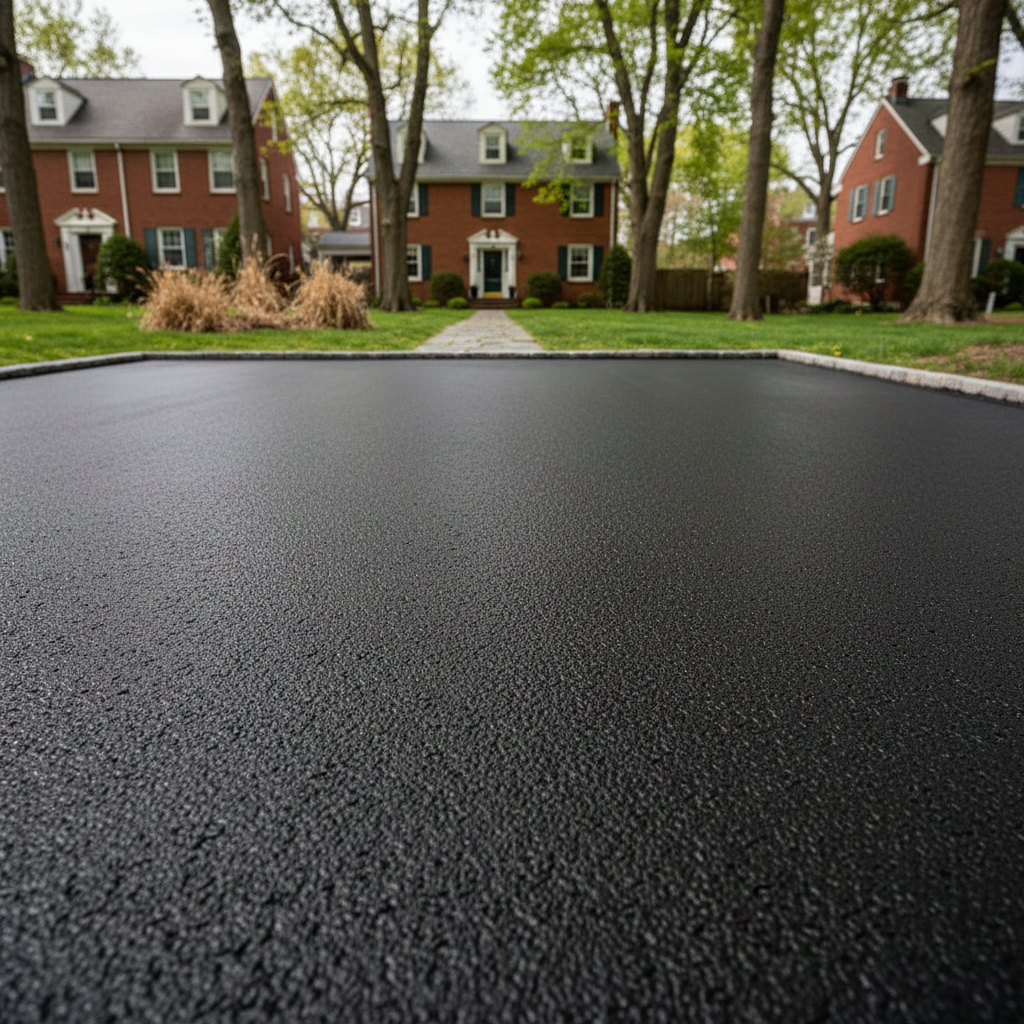
Alright, let's talk about slurry coating. I get a lot of calls from homeowners around Philly, from Fishtown to Chestnut Hill, asking how to keep their driveways looking good and lasting a long time. Slurry coating often comes up in these chats, and there's definitely a lot of confusion out there. So, I figured I'd tackle the most common questions I hear. This isn't marketing fluff, by the way; it's just what I've learned working with asphalt day in and day out.
What exactly is slurry coating, and how's it different from sealcoating?
This is probably the most common question I get. Think of sealcoating as a thin, protective paint job for your asphalt. It's usually a liquid asphalt emulsion, sometimes with sand, and it goes on pretty thin. It protects against UV rays, water, and spills, and makes your driveway look sharp and black again. It's great for regular maintenance.
Slurry coating, on the other hand, is a much thicker application. It's a mix of asphalt emulsion, finely graded aggregate (like sand or crushed rock), water, and some additives. Since it's got that aggregate in it, it does more than just protect. It actually fills in small cracks and voids, and helps restore some of the surface integrity of older, worn-out asphalt. It's like a heavier-duty, thicker skin for your driveway. You could say it's a step up from a basic sealcoat when you're looking at surface repair and how long it'll last.
When should I consider a slurry coat instead of just a regular sealcoat?
You'd lean towards a slurry coat when your driveway is showing more than just fading. If you're seeing a lot of fine hairline cracks, or the surface aggregate is starting to wear away and it looks a bit rough — that's when slurry coating becomes a better option. A sealcoat would just sit on top of those issues, you know? A slurry coat, with its thicker consistency and aggregate, actually helps fill those minor imperfections and provides a fresh wearing surface. Now, it's not for major structural problems. If you've got big potholes or wide cracks, you'll need repairs *before* either of these applications.
How long does a slurry coat typically last in our Philadelphia weather?
That's a good question, especially with our crazy weather here. We get everything from scorching humid summers to freezing winters with snow and ice, plus all the salt and plowing that comes with it. Generally, a well-applied slurry coat, using quality materials, can last anywhere from 3 to 7 years. That's a pretty big range, I know, but it depends on a few things: the quality of the original asphalt, how much traffic your driveway gets, and how well it was prepped. If your driveway gets a lot of sun exposure or heavy vehicle traffic, you might be on the lower end of that range. But it's definitely a longer-lasting solution than a standard sealcoat, which usually needs reapplication every 2-3 years.
What kind of prep work is involved before you apply a slurry coat?
Prep work is everything, seriously. You can have the best slurry material in the world, but if the surface isn't ready, it won't stick or last. First, we've got to clean the driveway thoroughly. That means sweeping, blowing, and often power washing to get rid of all the dirt, debris, oil spots, and loose aggregate. Any oil or grease needs to be treated and removed; otherwise, the slurry won't bond. Then, we address any existing cracks. Small cracks (up to about 1/4 inch) can often be filled by the slurry itself, but larger ones need to be cleaned and filled with a hot-pour crack filler beforehand. We also make sure the edges are clean and sometimes tape off areas to keep things neat. It's a lot more involved than people think, but it's crucial for a lasting job.
Can I drive on it right away, or how long does it take to cure?
Absolutely not right away! You've got to give it time to cure properly. Typically, you'll want to stay off it for at least 24-48 hours. That means no cars, no heavy foot traffic, no bikes, nothing. If you try to drive on it too soon, you'll leave tire marks, pull up the material, and basically ruin the fresh coat. The curing time can vary depending on the weather — humidity and temperature play a big role. On a hot, dry day, it might cure faster. On a cooler, more humid day, it'll take longer. We'll always give you a specific timeframe based on the conditions when we do the work. It's a small inconvenience for a long-lasting, good-looking driveway, wouldn't you say?
Is slurry coating a DIY job, or should I hire a professional?
Look, I'm a contractor, so you might expect me to say hire a pro. But honestly, for slurry coating, I really do recommend it. This isn't like painting a fence. The material is heavy, it's tricky to mix correctly, and applying it evenly takes skill and specialized equipment. If you don't get the mix right, or you apply it too thick in some spots and too thin in others, you're going to have a mess on your hands that won't last. Plus, the prep work is critical, and a lot of homeowners just don't have the tools or experience to do it right. You're dealing with a significant investment in your property, and a botched DIY job can end up costing you more to fix than if you'd just hired Apex Asphalt Co in the first place.
Will a slurry coat fix major cracks or potholes?
No, it won't. I need to be clear about this because it's a common misconception. Slurry coating is a preventative and restorative measure for the surface of your asphalt. It's great for filling in those small, spiderweb cracks and rejuvenating a worn-out top layer. But if you've got deep cracks, potholes, or areas where the asphalt has completely deteriorated, those need to be repaired properly *before* any slurry coating happens. Think of it like this: you wouldn't just paint over a hole in your wall and expect it to be fixed, right? You'd patch the hole first. Same principle here. We'd assess your driveway, fix any major damage, and then apply the slurry coat to protect and extend the life of those repairs and the rest of your asphalt.
Does it make my driveway slippery?
Another excellent question, especially considering our damp Philadelphia mornings and occasional ice. A properly applied slurry coat, especially one that includes fine aggregate, shouldn't make your driveway significantly more slippery. In fact, the aggregate in the mix can actually provide a bit more traction than a smooth, aged asphalt surface. However, any wet surface can be slick, and a newly applied, very smooth sealcoat (without aggregate) might feel a bit slicker when wet than a very rough, worn asphalt surface. With slurry, the texture it provides generally helps maintain good traction. We always aim for a finish that's safe and durable.
There you have it. Slurry coating can be a fantastic way to extend the life and improve the look of your asphalt driveway. Just make sure you know what you're getting into and, ideally, get a pro who knows their stuff to do the job right.