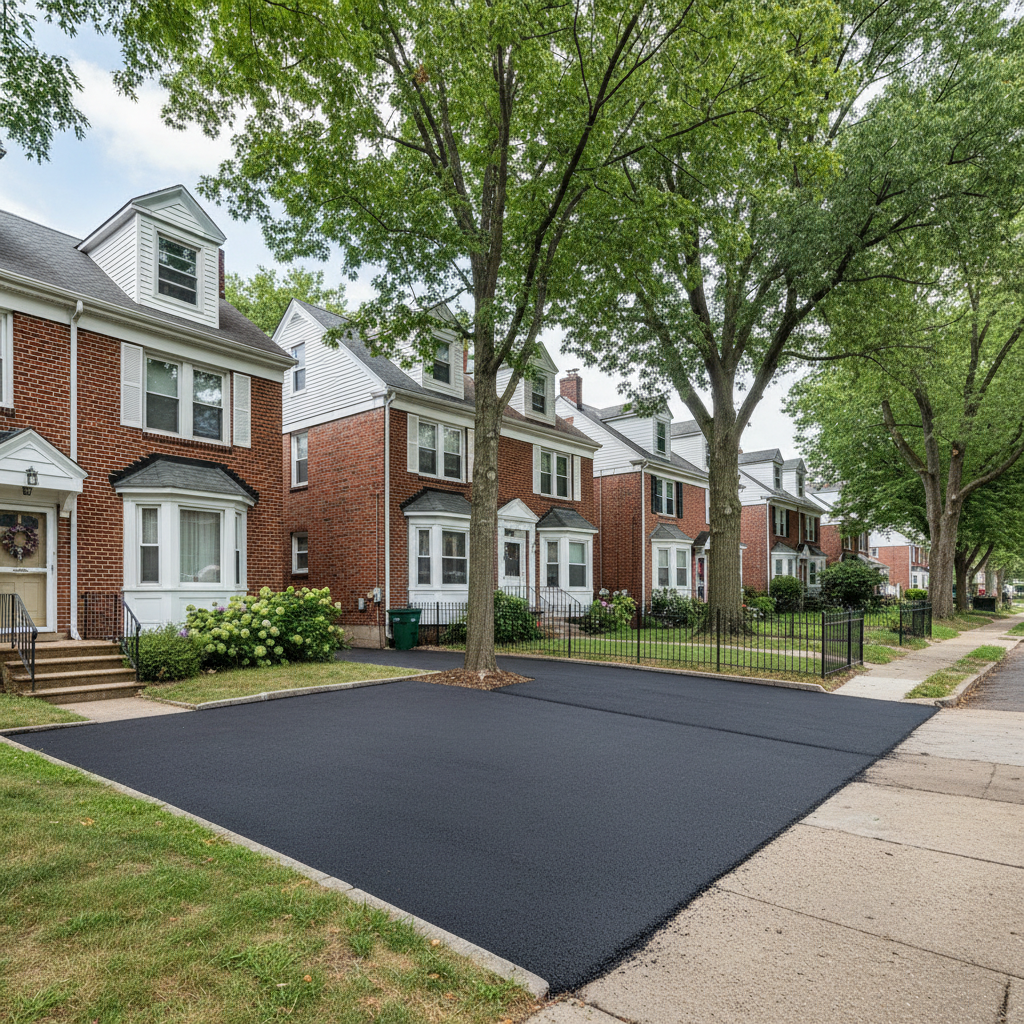
Ever wonder why you fix a pothole or a crack in your driveway, and it just pops right back up six months later? You're definitely not alone. Here in Philadelphia, we face some pretty unique challenges that turn asphalt repair into a real headache if you don't know what you're doing. It's not just about filling a hole, you know? It's about figuring out why that hole showed up in the first place and how our local conditions play a part.
The Philly Freeze-Thaw Cycle? It's a Killer.
Let's talk about the weather for a minute. Our winters here in Philly are absolutely brutal on asphalt. We get that constant freeze-thaw cycle – temperatures dip below freezing at night, water seeps into tiny cracks, freezes, expands, and then thaws out during the day. This expansion and contraction is like a jackhammer, working on your pavement from the inside out. It turns small cracks into big ones, and big cracks? Well, those become potholes. You see it everywhere, from major routes like Roosevelt Boulevard to the quiet residential streets in spots like Manayunk or South Philly, where older infrastructure often means more subtle drainage problems.
If you're just dumping some cold patch into a pothole without really getting to the bottom of the problem or properly preparing the area, you're basically slapping a band-aid on a gaping wound. It'll hold for a bit, sure, but it won't make it through another winter. That's why I always tell folks: don't just fix the symptom; you've got to fix the cause.
Drainage: The Unsung Hero of Pavement That Actually Lasts
Another huge factor, especially in our older neighborhoods with their tight lots and sometimes uneven grading, is drainage. Water is asphalt's absolute worst enemy. If water is pooling on your driveway or parking lot, or if it's seeping into the sub-base because of bad grading, you're going to have problems. And fast. I've seen countless driveways in places like Chestnut Hill or Society Hill where beautiful old homes have pavement that's constantly failing because the water isn't directed away properly. It's not always obvious, but a good contractor will definitely look for these things.
When we're doing repairs, we aren't just looking at the surface. We're thinking about how water moves across that surface and exactly where it's going. Sometimes, a simple repair might involve adding a small drain or adjusting the grade just a bit to make sure water sheds off properly. It's an extra step, but it makes all the difference in how long that repair actually holds up.
Sub-Base Matters More Than You'd Think
You could have the best asphalt mix in the world, but if the foundation underneath isn't solid, it's all for nothing. The sub-base is that layer of compacted aggregate right beneath your asphalt. It provides stability and helps spread out the load. If it's weak, soaked with water, or wasn't properly prepared to begin with, your asphalt is going to crack, sink, and fail prematurely. This happens quite often in areas where the soil might be clay-heavy or poorly drained, which we certainly have pockets of around the city.
When we're tackling a significant repair, especially a bigger pothole or an area that's always failing, we're often digging down to check out the sub-base. Sometimes, that means removing and replacing some of that material to make sure we have a stable foundation. It's more work, more material, but it's the only way to get a repair that truly lasts. You wouldn't build a house on a shaky foundation, right? Same idea for your asphalt.
Why "Local Expertise" Isn't Just a Fancy Term
This is where local knowledge really shines. A contractor from out of state, or someone who just does a quick patch job, might not get the nuances of Philly's climate, our soil conditions, or the typical construction methods used in our older properties. We've seen it all, from the narrow alleys of Fishtown to the sprawling commercial lots in the Northeast. We know what works here and what doesn't.
At Apex Asphalt Co, we've been dealing with Philly's pavement challenges for years. We understand the specific stresses our roads and driveways endure. When we quote a repair, we're not just giving you a price for a quick fix; we're giving you a solution that's built to withstand our local conditions. We'll explain why a certain repair method is better for your specific situation, whether it's a simple crack fill or a full-depth patch that addresses sub-base issues. Don't settle for a temporary fix when you can get a lasting solution.